Flower Garden — Role-Based E-Commerce Platform
A full-stack MERN flower-shop platform with email/password auth, real role-based admin access, a Material UI dashboard, product management, order tracking, and customer reviews — a step up from my earliest projects toward proper role-based access control.
Client repo: github.com/Ariful-tushar/flower-garden-client Server repo: github.com/Ariful-tushar/flower-garden-server Role: Solo developer (frontend, backend, and deployment) Type: Full-stack learning project — role-based e-commerce platform
Overview
Flower Garden is a full-stack MERN e-commerce platform for browsing and ordering flowers, built shortly after Travel Taker as a step up in complexity: instead of every signed-in user seeing the same admin links, this one has a real admin role stored per-user in MongoDB, a dedicated AdminRoute guard on the client, and a Material UI dashboard with a persistent sidebar that shows a completely different set of links depending on whether the signed-in user is a regular customer or an admin.
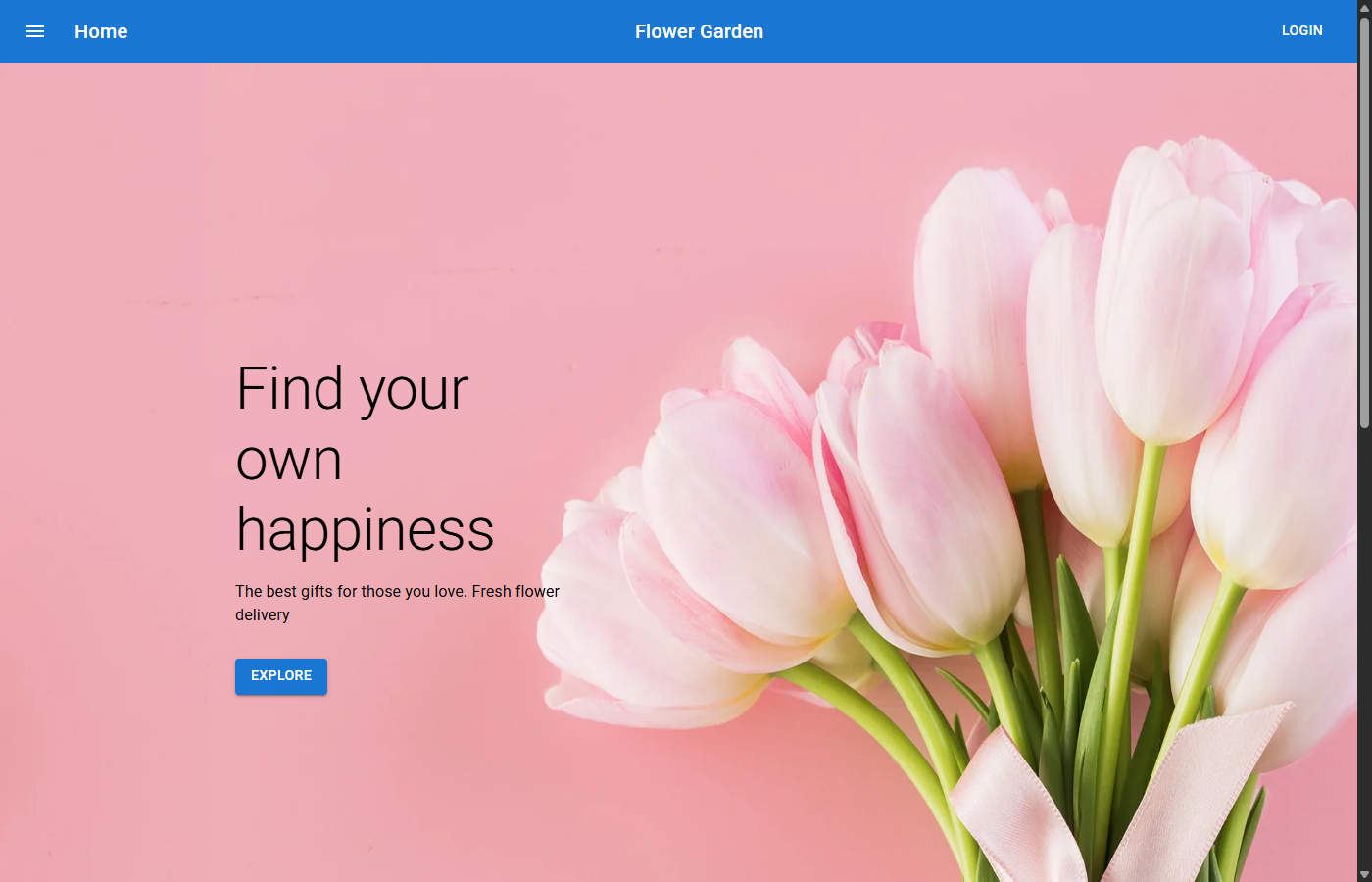
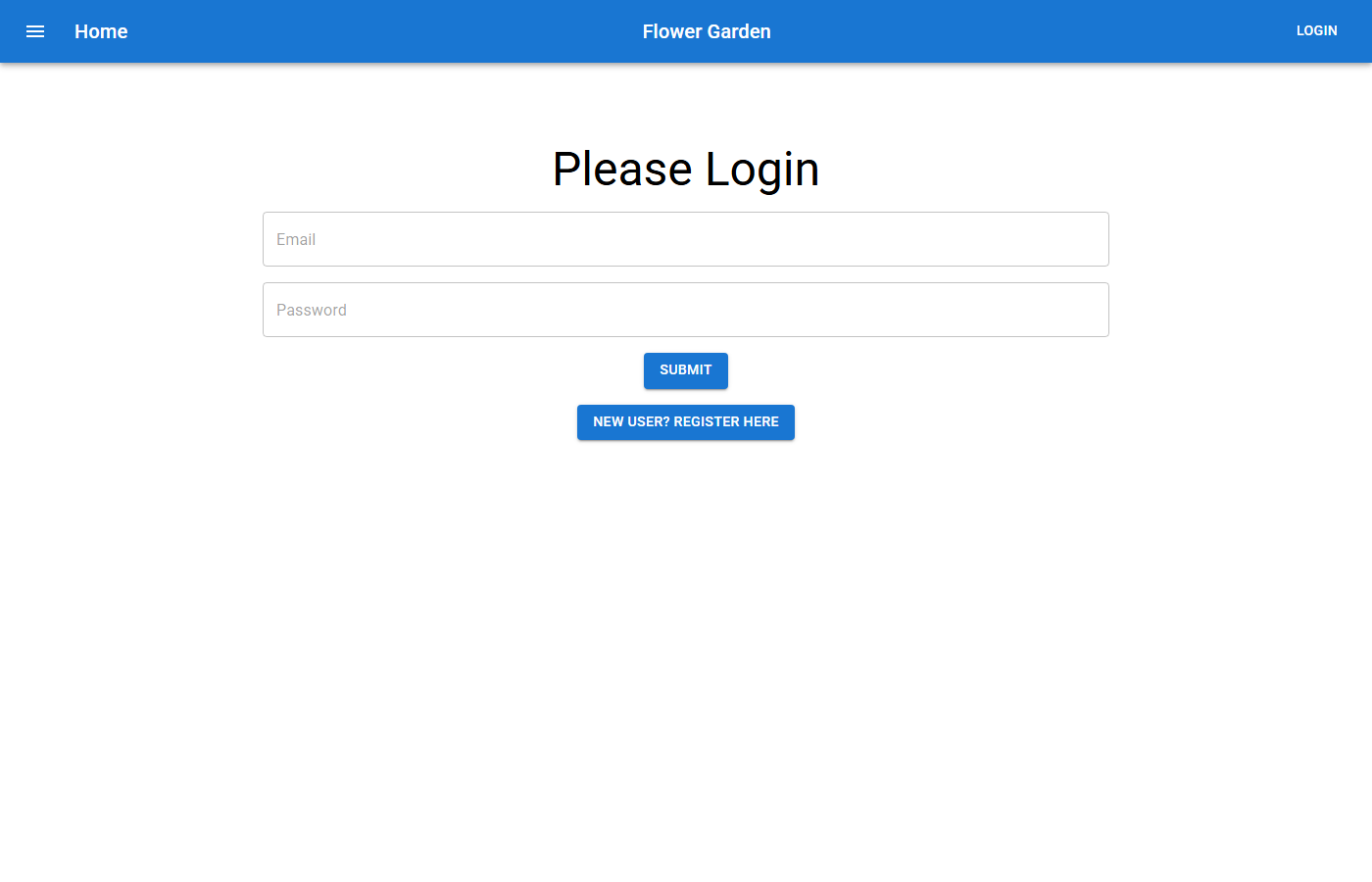
A note on the live demo: like Travel Taker, the frontend is still live on Firebase Hosting, but the Express/MongoDB API was deployed on Heroku's free tier, which Heroku retired in November 2022 — so the backend is no longer running. The homepage hero and the login screen still render correctly (see the screenshots below), but the product catalogue, dashboard data, and admin actions won't load live since there's no API behind them anymore. Both repos — client and server — are unchanged and available in full at the links above.
Key Features
- Email/password authentication via Firebase Auth, with new users written to a
userscollection in MongoDB on registration. - Real role-based access control — an
AdminRouteguard checks both that a user is signed in and that their stored role isadminbefore allowing access to admin-only pages, redirecting everyone else. - Material UI dashboard with a persistent sidebar (temporary/collapsible on mobile, permanent on desktop) that renders a different navigation set for admins (Manage All Orders, Manage All Products, Add New Product, Make Admin) versus customers (Pay, My Orders, Review).
- Product catalogue — an Explore page listing all flowers pulled from MongoDB, plus an admin-only Add Product form and a Manage All Products view with delete/update.
- Order lifecycle — customers place orders and track "My Orders"; admins see every order across all customers in Manage All Orders and can update order status.
- Customer reviews — a star-rating review form (
react-rating) that posts to areviewscollection, shown on the homepage. - Make Admin panel — lets an existing admin promote another user's account to admin by email.
How It Works
- Register / sign in — Firebase email/password auth; new accounts are also saved to a
userscollection viaPOST /users. - Admin check — on every auth state change, the client calls
GET /users/:email, and the server checks that user's storedrolefield to decide whether to grant admin UI access. - Browse & order — the Explore page lists all flowers from
GET /flowers; placing an order posts toPOST /orderstied to the signed-in user's email. - Customer dashboard — "My Orders" fetches only that user's orders (
GET /orders?email=...); "Review" posts a rating and comment toPOST /reviews. - Admin dashboard — "Manage All Orders" lists every order (
GET /orders) with status updates (PUT /orders/:id); "Manage All Products" and "Add New Product" cover the catalogue (POST /flowers,DELETE /flowers/:id); "Make Admin" promotes another user viaPUT /users/makeadmin.
Tech Stack & Skills Demonstrated
Frontend
React 17 · React Router v5 (role-gated private routes) · Material UI (MUI v5) · Emotion · React Hook Form · react-rating · react-material-ui-carousel · Font Awesome
Backend Node.js · Express · MongoDB (native driver, Atlas-hosted) · CORS · dotenv-based config
Auth & deployment Firebase Authentication (email/password) · Firebase Hosting (client) · Heroku (API, since retired)
Engineering practice Role-based access control with a dedicated route guard · a five-collection MongoDB schema (flowers, orders, reviews, users, and role data) · a responsive dashboard shell shared between two different user-facing views · REST API design across multiple related resources
Project Structure
flower-garden-client/
├── src/
│   ├── Pages/
│   │   ├── Home/               # Banner, product grid, reviews
│   │   ├── Explore/             # Full product catalogue
│   │   ├── Login/                # Firebase config, Login, Register, PrivateRoute, AdminRoute
│   │   ├── Purchase/             # Order placement
│   │   ├── DashBoard/
│   │   │   ├── DashBoard/        # MUI sidebar shell, role-based nav
│   │   │   ├── AddProduct/       # Admin: add flower
│   │   │   ├── ManageAllProducts/# Admin: edit/delete flowers
│   │   │   ├── ManageAllOrders/  # Admin: all-orders view
│   │   │   ├── MakeAdmin/        # Admin: promote a user
│   │   │   ├── Myorders/         # Customer: own orders
│   │   │   ├── GiveReview/       # Customer: star-rating review form
│   │   │   └── Payment/          # Placeholder — payment gateway not implemented
│   │   └── Shared/                # Navigation, Footer
│   ├── Context/                   # Firebase auth context provider
│   └── Hooks/                     # useFirebase, useAuth

flower-garden-server/
└── index.js                        # Express app — flowers, orders, reviews, users endpoints
Reflection
Compared to Travel Taker, this project's route-guarding is real — AdminRoute actually checks a stored role, not just whether someone is logged in. That said, the server-side /users/makeadmin endpoint has no auth check of its own (the guard only exists in the React app), so anyone who found the API directly could call it — the kind of gap that's obvious in hindsight and exactly why authorization has to be enforced server-side, not just hidden in the UI. The Payment page was also never finished — it's a "coming soon" placeholder rather than a real gateway integration. I'm keeping this one in the portfolio alongside Travel Taker because together they show the progression from "any logged-in user can reach admin pages" to "a dedicated role check gates them," even though neither one enforces that check on the server.